

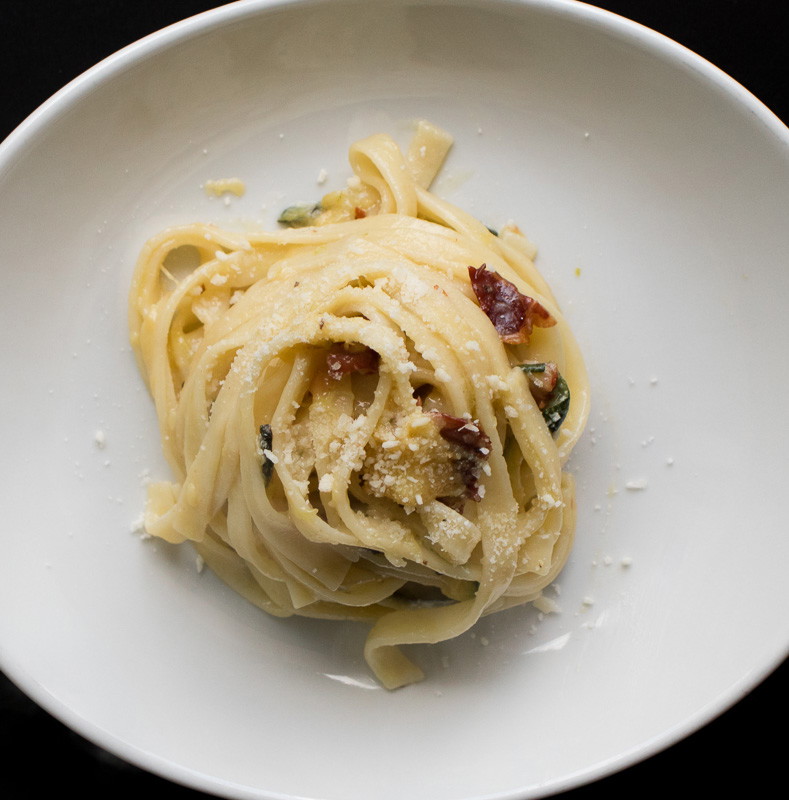
Giuseppe's mom, Lina, first made this pasta con pancetta e zucchine for us during a visit to Calabria in 2019. In our kitchen, we rarely repeat the same meal twice — but we make exceptions for absolute favorites like traditional eggplant parmigiana and potatoes with bell peppers. This dish earned its place because it perfectly balances salty, crispy pork with the sweetness of summer zucchini. It has been on our table every season since.
The History of Pasta con Pancetta e Zucchine
This is quintessential Italian cucina casalinga — home cooking at its best. Unlike carbonara or pesto, it has no single rigid birthplace. It belongs to the central and southern Italian kitchen, appearing most often in Calabria, Campania, and Emilia-Romagna. In Calabria, the combination makes particular sense: the mountainous terrain is ideal for raising pigs for pancetta, while the warm coastal plains produce exceptional summer zucchini. In Bologna, you might find a variation using gramigna pasta with a touch of saffron.
It is also a prime example of how Italian cooks build a sauce from rendered pork fat rather than butter or cream — the same principle behind ragù alla bolognese, pasta all'amatriciana, and carbonara. If you want to explore that tradition more broadly, our guide to meat-based Italian sauces covers the full landscape from north to south.
Italian cooking depends above all on ingredient quality. If you cannot find pancetta, a thick-cut fresh bacon from your local butcher is a worthy substitute — aim for slices about 1/4 inch thick, cut into thin strips. We always cook the meat covered, which traps steam, renders the fat evenly, and keeps the pancetta tender and slightly chewy rather than dry and brittle.
How to Choose Pasta and Ingredients
Both long and short pasta shapes work beautifully here. Spaghetti, rigatoni, and mezzamaniche are our favorites because they catch and hold the silky sauce. One important note: pancetta and guanciale are both heavily salted meats, so be measured with your pasta water salt and taste often as the dish comes together. Zucchini absorbs salt readily, and the parmigiano reggiano added at the end will increase saltiness further. Taste as you go — this is the most important step.
This dish shines in the transition seasons. It feels light enough for a warm summer evening but satisfyingly rich. In autumn, some cooks swap zucchini for butternut squash. If you find yourself with a surplus of garden tomatoes at peak summer, our pasta all'amatriciana might be calling your name instead.
Ingredients
- 350g (0.75 lb) spaghetti
- 135g (0.3 lb) pancetta or guanciale (or 4 slices thick-cut bacon)
- 2 large zucchini (about 8 inches each)
- 2 tbsp coarse sea salt (for pasta water)
- Freshly cracked black pepper, to taste
- 1/4 cup freshly grated parmigiano reggiano (optional but recommended)
- Extra virgin olive oil (for finishing, optional)
Step-by-Step Instructions
Step 1: Prep your ingredients
Fill a medium-large pot with water and bring to a boil. Add coarse sea salt until the water tastes well-seasoned — it should taste almost like mild seawater. Cut the pancetta into 1/4-inch strips. Halve the zucchini lengthwise, then slice into 1/4-inch half-moons.
Step 2: Render the pancetta
Heat a medium-large sauté pan over medium-low heat. Add the pancetta, cover, and cook for 15 to 20 minutes, until the fat has fully rendered and the meat is lightly browned but still soft and slightly chewy. Do not rush this step — low and slow is the key. Remove the pancetta with a slotted spoon and set aside. Leave all the rendered fat in the pan.
Step 3: Cook the zucchini
Add the sliced zucchini directly into the pancetta fat. Cover and cook over medium heat for about 20 minutes, stirring occasionally, until the zucchini has fully softened and begun to break down. This is what gives the dish its silky, almost creamy texture. Return the pancetta to the pan, stir to combine, and remove from heat.
Step 4: Cook the pasta
Add the spaghetti to the boiling water and stir every 2 minutes to prevent sticking. Cook until 2 to 3 minutes before al dente — the pasta will finish cooking in the pan. Before draining, reserve 1½ cups of the starchy pasta water. Do not skip this step; the pasta water is what builds the sauce.
Step 5: Bring it all together
Return the zucchini and pancetta pan to medium heat. Quickly strain the pasta and add it directly to the pan. Increase the heat to high and stir vigorously. If the pasta looks dry, add pasta water a splash at a time, continuing to stir until the sauce is glossy and coats every strand. Cook for an additional 2 to 3 minutes. Remove from heat and fold in freshly grated parmigiano reggiano until smooth. Finish with freshly cracked black pepper and a drizzle of your best extra virgin olive oil.
Frequently Asked Questions
Can I use frozen zucchini?
We don't recommend it. Frozen zucchini releases too much water and turns mushy during the sauté — fresh zucchini gives you the proper texture and caramelization this dish depends on.
What is the best substitute for pancetta?
A thick-cut, high-quality smoked bacon is the best alternative if pancetta or guanciale aren't available locally. Ask your butcher for a fresh cut if possible, and slice it yourself at home for the best results.
Should I peel the zucchini?
No. The skin adds color, provides nutrients, and helps the slices hold their shape during the long sauté. Leave it on.
Can I make this dish ahead of time?
The pancetta and zucchini mixture can be prepared a few hours ahead and gently reheated. Cook the pasta fresh and combine just before serving — pasta waits for no one.
What wine pairs well with pasta con pancetta e zucchine?
A light-bodied red from Calabria — like a Cirò Rosso — or a crisp white like Greco di Tufo. Both complement the salty richness of the pancetta without overpowering the delicate zucchini.
What olive oil should I use?
A high-quality, single-origin extra virgin olive oil makes a real difference here — both in cooking the zucchini and in finishing the dish. We use our own, cold-pressed from groves along the Ionian coast of Calabria that have been in Giuseppe's family since 1927.
We wrote a book called The Olive Oil Enthusiast. Order your copy today.
Every recipe in our kitchen starts with our family's extra virgin olive oil, cold-pressed from groves along the Ionian coast of Calabria that have been in Giuseppe's family since 1927. It is what we use every day — and it makes a genuine difference in dishes like this one. Shop our olive oil here.
You may also like:
Guide to Meat Based Italian Sauces
Made this recipe? Tag your photos with #EXAUoliveoil and follow us on Instagram, Facebook, TikTok, and YouTube for more recipes.


Leave a comment