

This is the first recipe we ever published on the EXAU blog. Giuseppe made it in 2018 when we were just getting started, and it has been on the site ever since — updated and refined over the years, but still his. It is the focaccia he grew up eating in Calabria, made the way southern Italians have always made it: with a lot of very good olive oil. Focaccia is one of Italy's most iconic regional breads — to see how it fits into the broader tradition, read our Guide to Italian Breads by Region.
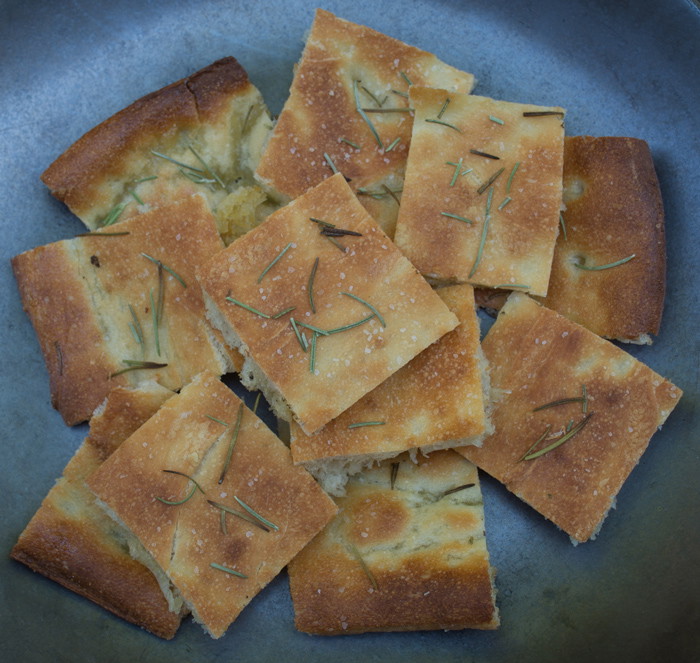
Ripping off a piece of warm rosemary focaccia should feel like a hug from an old friend. Light, doughy, salty, herby, and golden on top. That is what this recipe produces every single time.
How do you make authentic Italian Rosemary Focaccia?
To make authentic Italian rosemary focaccia, prepare a high-hydration dough using bread flour and extra virgin olive oil. Crucially, allow the dough to undergo a cold fermentation in the refrigerator for 20 to 24 hours to develop a light, airy texture. Stretch the dough into a heavily oiled tray using your fingertips to create dimples, top with fresh rosemary and sea salt, and bake at the highest possible oven temperature (550°F) until golden and crispy.
Focaccia and Southern Italian Olive Oil
Focaccia is one of the oldest bread recipes in the world. In ancient Rome it was called Panis Focacius — a flatbread baked on the hearth. The word focaccia comes from the Latin "focus," meaning baked on hearth. For Romans it was considered so important it was offered to the gods during celebrations. The original recipe was a mixture of white flour, salt, olive oil, and water.
Today most people associate focaccia with northern Italy — specifically Genoa, which produces the most famous version. Genovese focaccia is classic and beautiful: olive oil and salt, nothing more. But northern Italy is not where most of Italy's olive oil comes from. Southern Italy produces the vast majority of the country's olive oil — Puglia is Italy's largest producer, and Calabria is second. This means the most olive oil-forward focaccia in the country has always been a southern tradition, even if it gets less attention.
In Puglia they make focaccia barese — topped with tomatoes, olives, and an extraordinary amount of olive oil. In Calabria you find focaccia with potatoes from the Sila mountains, with Tropea onions, or spread with sardella — a spicy Calabrian fish paste that is unlike anything else in Italy. There is a place in Crotone we go to regularly that makes some of the best focaccia we have ever had. The secret, as always, is the olive oil.
When you make focaccia with oil from the region that grows most of Italy's olives, the difference is real. Southern olive oil has a depth and fruitiness that transforms simple bread into something genuinely special. We use our Turi — lighter and more delicate — for both the dough and the topping. It soaks into the crust as it bakes and creates that characteristic golden, slightly crispy top that defines great focaccia.
The History of Focaccia
Focaccia has traveled a long way from ancient Roman hearths. Over the centuries different regions of Italy developed their own versions — from the paper-thin, cracker-like Pizza Romana in Lazio to the pillowy square focaccia found all over the country. Focaccia barese, with its tomatoes and olives, is one of the most famous regional variations. And of course there is the Calabrian tradition of topping flatbreads generously with local ingredients — whatever is in season, whatever is in the pantry.
This recipe uses rosemary because that is how Giuseppe makes it. But the beauty of focaccia is that the toppings are completely flexible. Use what you love: sliced Tropea onions, cherry tomatoes, olives, potato slices, or just coarse salt and olive oil the way the Romans did.
Ingredients
- 3 cups bread flour
- 1 tsp yeast
- 3½ tsp extra virgin olive oil (Turi), plus additional for tray and topping
- 1¼ cup cold water
- 3½ tsp salt
- 1 pinch sugar
- Rosemary to taste
- Kosher salt to taste
Equipment: 1 standard flat non-stick baking tray, 1 large bowl with high sides
How to Make Rosemary Focaccia
The Dough
- Add cold water to a large bowl then add the yeast. Stir together until the yeast has dissolved.
- Add 2 cups of flour to the yeast and water mixture one spoonful at a time while continuously kneading. The mixture will begin to resemble a dough.
- When the dough has reached a sticky yet smooth consistency, fold in the salt and then the olive oil. Continue to knead.
- Add the last cup of flour one spoonful at a time, continuously kneading until all ingredients are folded in evenly and the dough no longer sticks to your hands.
- Form the dough into a round ball and remove from the bowl. Cover the bottom of the bowl with a light sprinkling of flour, place the dough back in, and sprinkle the top and sides with flour.
- Cover the bowl with plastic wrap and refrigerate for 20 to 24 hours. The low temperature allows the dough to rise slowly and properly — do not rush this step. It is what gives the focaccia its light, airy texture.
- Remove the dough from the fridge and let it sit at room temperature for 2 more hours. It will continue to rise.
Preparing the Tray
- Preheat the oven to 550°F (or the maximum heat your oven allows).
- Pour 2 tablespoons of extra virgin olive oil into the baking tray and rub it evenly into all sides.
- Place the dough in the center of the tray. Using the tips of your fingers — not your nails, which will tear the dough — gently push the dough outward toward the edges of the tray. Work slowly and evenly. This may take several minutes. Be patient.
Toppings and Baking
- Sprinkle the dough with kosher salt, rosemary, and 1 tablespoon of extra virgin olive oil. You can gently rub the ingredients into the surface if you like — just be careful not to press the dough into the pan or it will stick.
- Place the tray in the preheated oven and bake for 8 minutes until the top is golden brown.
- Remove from oven, cut, and serve immediately while still warm.
Tips for Perfect Focaccia
The dough is the most important part of this recipe. There are a few steps required to make it properly — do not skip any of them and be patient. The good news is that most of the time is simply waiting. The active prep time is short. The payoff is significant.
Do not go overboard with toppings. Focaccia is not pizza. Two or three toppings maximum — and always a generous pour of olive oil. The oil is not optional. It is the recipe.
Serve warm. Always warm. Focaccia served cold is a different and inferior experience. If you have leftovers, reheat in the oven at 350°F for 5 minutes rather than the microwave.
Frequently Asked Questions
Why do you use cold water in the dough?
Cold water slows the yeast activity, which allows the dough to develop flavor and texture gradually over the long refrigerator rest. A slow, cold rise produces a much better result than a quick room-temperature rise. Do not substitute warm water here.
Can I use all-purpose flour instead of bread flour?
You can, though bread flour produces a chewier, more structured result because of its higher protein content. All-purpose flour will give you a softer, slightly less chewy focaccia. Both work — bread flour is preferred.
What olive oil is best for focaccia?
A high-quality extra virgin olive oil is essential — both in the dough and on top. The oil soaks into the crust as it bakes and is one of the primary flavor components of the finished bread. We use our Turi EVOO every time. Its lighter, more delicate profile works beautifully in bread without overpowering the rosemary.
Can I use different toppings?
Absolutely. Rosemary is Giuseppe's classic but focaccia is one of the most flexible breads there is. Try Tropea onions, cherry tomatoes, olives, thin potato slices from the Sila, or simply coarse salt and a very generous amount of olive oil in the Genovese tradition. Keep it to two or three toppings maximum.
Why does focaccia need so much olive oil?
Because focaccia is fundamentally an olive oil bread. The oil in the tray creates a crispy, almost fried bottom crust. The oil on top soaks into the surface as it bakes, creating the golden, slightly glossy top that defines great focaccia. Skimping on the oil produces a dry, flat result. Southern Italian bakers have always been generous with olive oil in their breads — and they are right to be.
Skyler and Giuseppe wrote The Olive Oil Enthusiast (Penguin Random House). Order your copy today.
Every recipe in our kitchen starts with our family's extra virgin olive oil, cold-pressed from groves along the Ionian coast of Calabria that have been in Giuseppe's family since 1927. It is what we use every day — and it makes a genuine difference in dishes like this one. Shop our olive oil here.
You may also like:
If you make this focaccia, leave a comment below and let us know how it turned out. Tag us on Instagram, TikTok, or Facebook and use #EXAUoliveoil so we can repost.


Leave a comment