


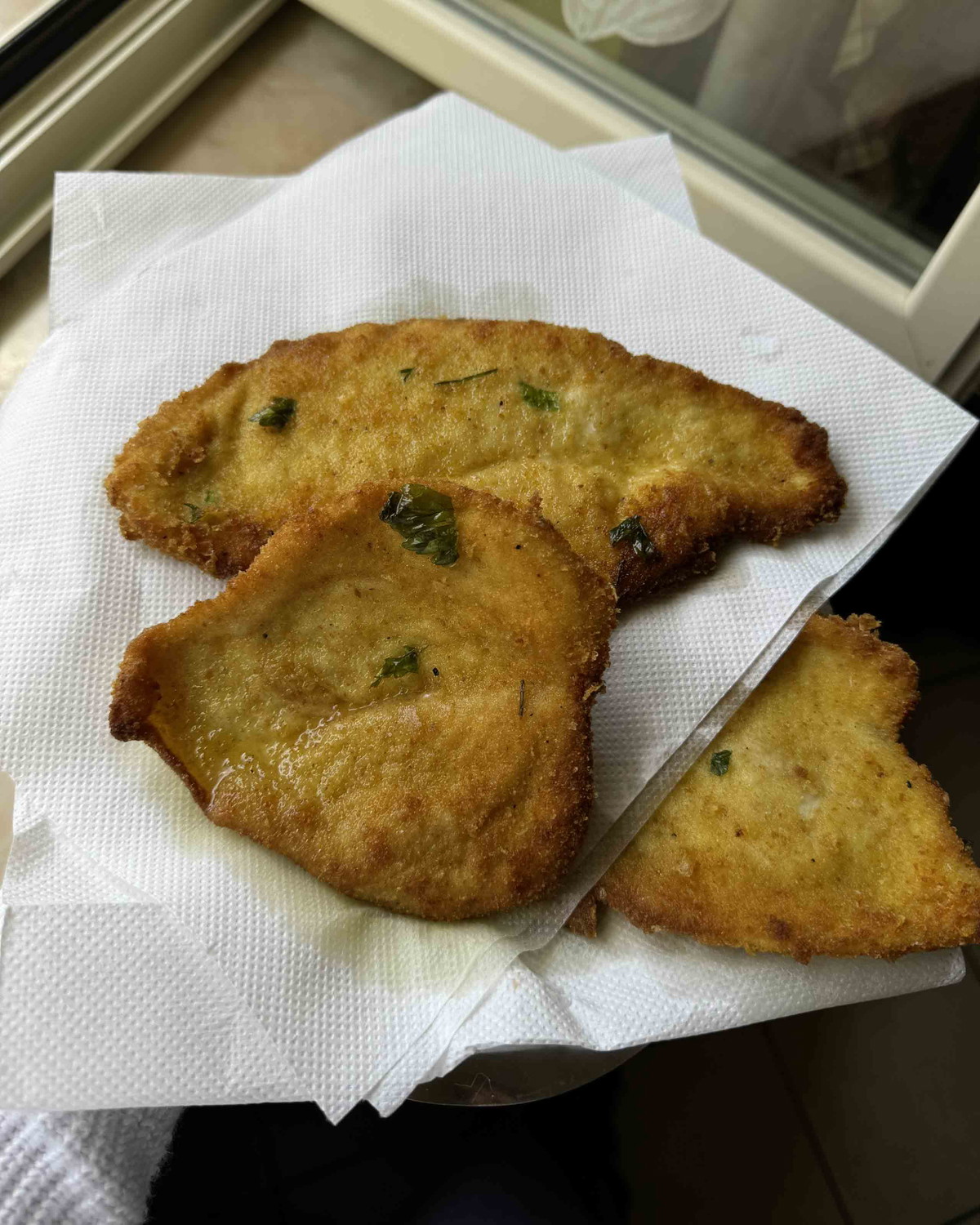
These chicken cutlets are crunchy, juicy, and packed with flavor. This recipe comes straight from my Italian mother-in-law Lina's kitchen in Calabria, Italy. It is one of our family's favorites — we make it repeatedly.
One of our favorite things about Lina is that she never tells us what she is making for lunch. We find out by the scent drifting through her kitchen window. When we smell these frying in extra virgin olive oil, we know it is going to be one of the best meals of the week.
This recipe is part of our complete guide to Best Italian Fried Foods: A Regional Guide.
How do you make authentic Italian chicken cutlets?
To make authentic Italian chicken cutlets, pound chicken breasts thin (between 1/8 and 1/4 inch), soak them in a seasoned egg wash with garlic, and coat with a mixture of dry breadcrumbs and Parmigiano Reggiano. Fry the breaded cutlets in high-quality extra virgin olive oil at 350°F (175°C) until golden brown and crispy.
Every recipe in our kitchen starts with our family's extra virgin olive oil, cold-pressed from groves along the Ionian coast of Calabria that have been in Giuseppe's family since 1927. It is what we use every day — and it makes a genuine difference in dishes like this one. Shop our olive oil here.
What You Need to Make Italian Chicken Cutlets
You probably already have most of these in your pantry:
- Chicken breast
- Eggs
- Garlic
- Breadcrumbs
- Parmigiano Reggiano
- Extra virgin olive oil (for frying — a high-quality EVOO makes a real difference)
How to Make Chicken Cutlets: Step by Step
Step 1: Pound the Cutlets Thin — This Step Is Non-Negotiable
The most important step is making sure your cutlets are very thin. The ideal thickness is between 1/8 and 1/4 inch. Thin cutlets cook quickly, which keeps the juices inside and develops a golden, crunchy crust.
If you buy from a local butcher, ask them to pound the cutlets thin for you. Most will do it happily. If you are buying from a grocery store, you can do it yourself at home.
How to Pound Chicken Cutlets at Home
Slice the whole breast into strips about 1/2 inch thick. Use a meat mallet to pound them out. If pieces get too wide, cut them in half. Aim for uniform thickness — this ensures even cooking. Use the smooth side of the mallet to avoid poking holes in the meat.
Step 2: Soak in Egg for Maximum Flavor ("Più Saporito")
The flavor in these cutlets comes from the egg mixture. The eggs absorb the garlic and create the sticky base for the breadcrumb crust. Let the chicken rest in the mixture long enough to become più saporito — "tastier," as Lina says. The egg also tenderizes the meat. Do not rush this step.
Step 3: Bread and Fry for the Perfect Crunch
Use dry breadcrumbs. Fresh breadcrumbs have too much moisture — they soften quickly, fall off in the oil, and make a mess. Dry crumbs give you that clean, crispy crust.
Do not overcrowd the pan. Fry 2 to 4 cutlets at a time with room around each one. Crowding drops the oil temperature, which prevents browning and kills the crunch. Always work in batches.
Place cooked cutlets on a wire rack to drain. This prevents steam from softening the crust. Salt immediately after frying — seasoning sticks best while the crust is hot. Serve promptly.
Getting the Olive Oil Temperature Right
Frying is a daily practice in southern Italy, especially in Calabria. We almost never use a thermometer. Our method: drop a few breadcrumbs into the oil. If they sizzle immediately, you are ready. If you prefer precision, aim for around 350°F (175°C).
Why We Fry in Extra Virgin Olive Oil
People say you cannot fry in extra virgin olive oil. This is incorrect. In southern Italy, it is the standard — people have been doing it for centuries. Science also confirms that extra virgin olive oil is the most stable cooking fat available. That is exactly why we use it for as much of our cooking as possible.
Worried about smoke point? Do not be. At frying temperatures, you will not reach the smoke point of olive oil. And smoke point is not a reliable measure of an oil's stability anyway. For a full breakdown of why frying in olive oil works, read our guide on frying with olive oil.
How to Serve Italian Chicken Cutlets
Keep it simple. We usually pair these with sautéed vegetables or a freshly dressed salad. A few of our favorites:
- A simple green salad with our EVOO-based salad dressing over romaine or arugula
- A bright tomato salad
- Pickled vegetables or marinated eggplant
Frequently Asked Questions
Can you fry chicken cutlets in olive oil?
Yes. Extra virgin olive oil is one of the best frying fats available. It is stable at frying temperatures and adds flavor that neutral oils cannot. Southern Italian cooks have fried in olive oil for generations. Read our full guide to frying with olive oil here.
How thin should chicken cutlets be?
Between 1/8 and 1/4 inch. This is the most important factor in getting a juicy interior and a crispy crust. Too thick and the outside burns before the inside cooks through.
Why do my breadcrumbs fall off when frying?
Usually because the breadcrumbs are too fresh (too much moisture) or the oil is not hot enough. Use dry breadcrumbs and make sure the oil is fully up to temperature before adding the cutlets. Letting the breaded cutlets rest for a few minutes before frying also helps the crust adhere.
How do I keep chicken cutlets crispy after frying?
Place them on a wire rack rather than paper towels. Paper towels trap steam underneath, which softens the crust. A wire rack lets air circulate and keeps the crust crisp.
Can I make chicken cutlets ahead of time?
They are best eaten immediately after frying. If you need to make them ahead, reheat in a hot oven (400°F) on a wire rack for 8 to 10 minutes to bring back some of the crunch. Avoid the microwave — it makes the crust soft.
Skyler and Giuseppe wrote The Olive Oil Enthusiast (Penguin Random House). Order your copy today.
Every recipe in our kitchen starts with our family's extra virgin olive oil, cold-pressed from groves along the Ionian coast of Calabria that have been in Giuseppe's family since 1927. It is what we use every day — and it makes a genuine difference in dishes like this one. Shop our olive oil here.
You may also like:
Vrasciole — Calabrian Fried Italian Meatballs
Parmigiana (Italian Eggplant Parmesan)
Made this recipe? Tag your photos with #EXAUoliveoil and follow us on Instagram, Facebook, TikTok, and YouTube for more recipes.


1 comment
I made these last night and was beside myself with joy at how delicious they were (so crispy!) and how much they tasted like the cotolette my relatives in Italy make when I’m visiting. Grazie mille!
P.S. Now I’m going to have to exercise self restraint and not use this recipe every time I cook chicken.
Leave a comment