




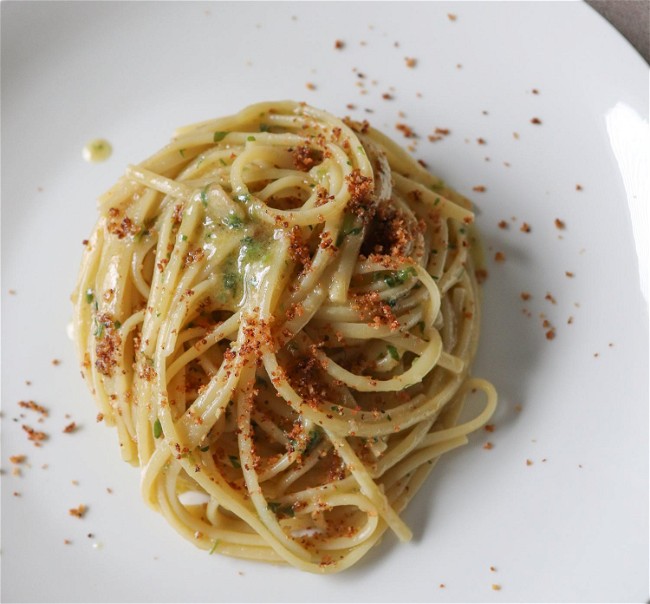
Pasta aglio e olio, or pasta with garlic and olive oil, is one of the most iconic dishes in Italian cooking. It takes about 20 minutes to make, uses ingredients you almost always have on hand, and delivers a result that is far greater than its simplicity suggests. It is our go-to weeknight meal when we are short on time but still want something genuinely good.
Think of it as the Italian answer to mac and cheese, simple, comforting, and deeply satisfying.
What Is Pasta Aglio e Olio?
At its most traditional, pasta aglio e olio has just two sauce ingredients: garlic and extra virgin olive oil. That is it. The magic is entirely in the technique.
We also like to add Parmigiano Reggiano and fresh parsley, and sometimes anchovies and a spicy pepper. Giuseppe is from Calabria, so a little heat is always welcome. One important note: if you add anchovies, skip the cheese. In Italian cooking, seafood and cheese are almost never combined.
This dish is also popular with Italian children, especially picky eaters, because it has no tomato sauce and keeps things very simple. If you have a reluctant eater at the table, this one is worth trying.
How to Make Pasta Aglio e Olio
The most important thing you can do before you start cooking is prep everything in advance. This dish moves quickly once the garlic hits the oil. If anything is unprepped when you need it, you risk burning the garlic and having to start over.
Have your garlic chopped, parsley washed, cheese grated, pasta water boiling, and utensils ready before you turn on the heat.
Use a High Quality Extra Virgin Olive Oil
Extra virgin olive oil is not just a cooking fat in this dish. It is the sauce. The oil carries every flavor in the pan, garlic, anchovy, pepper, directly into each bite of pasta. Using a high-quality extra virgin olive oil adds depth and richness that cannot be replicated by a lesser oil.
Do not be light-handed here. This is the moment to use the good stuff. Our Turi extra virgin olive oil is what we use for this dish every time.
Related: Regular Olive Oil vs. Extra Virgin Olive Oil
How to Prep and Cook the Garlic
Roughly chop the garlic into chunks or simply smash the cloves. Do not mince it finely or it will burn before it has a chance to infuse the oil.
Add the garlic to the oil over low heat and let it gently cook until it turns a light blonde color and becomes very shiny. You are not frying it, you are infusing the oil with its flavor. The result is a subtly garlicky oil that seasons every single bite without being sharp or bitter.
Raise and lower the pan from the heat as needed to control the temperature. Remove the pan from heat entirely shortly before the garlic is done to let residual heat finish the cooking. If you are nervous, use a slotted spoon to pull the garlic out and add it back once the oil has cooled slightly.
If the garlic burns, the oil is unsalvageable and you will need to start over. As a rule, never leave the stove unattended when cooking garlic in olive oil.
How to Prep the Parsley
Fresh parsley is essential in this dish. It adds brightness and color that lifts the whole plate.
About 30 seconds before cutting the heat, add the parsley stems to the pan and let them sizzle. Once the heat is off, remove the stems and add the parsley leaves. The stems add flavor during cooking and the leaves finish the dish fresh.


Shop our 100% Italian extra virgin olive oil, made in Calabria, single origin, and family farmed since 1927.
Frequently Asked Questions
What does aglio e olio mean?
Aglio e olio is Italian for "garlic and oil." The full name of the dish is pasta aglio e olio, which translates to pasta with garlic and oil. It is one of the simplest and most traditional pasta preparations in Italian cuisine.
What is the best pasta shape for aglio e olio?
Spaghetti is the most traditional choice. The long strands coat evenly in the garlic-infused oil. Linguine also works well. Avoid short pasta shapes, as they do not carry the sauce as effectively.
Can I add protein to pasta aglio e olio?
Anchovies are the most traditional addition and dissolve completely into the oil, adding depth without being overpowering. If you add anchovies, skip the cheese. Shrimp is another option, though it moves the dish away from the classic version.
Why is my pasta aglio e olio greasy?
The oil and pasta water need to emulsify properly. Add the starchy pasta water gradually while tossing the pasta continuously in the pan. The starch binds the water and oil into a cohesive sauce rather than leaving them separate.
What olive oil should I use for pasta aglio e olio?
Use the best extra virgin olive oil you have. Since olive oil is the sauce, its quality is completely apparent in the final dish. A grassy, well-made EVOO will transform this dish. A bland or low-quality oil will flatten it. Our Turi EVOO is a great choice here.
We wrote a book called The Olive Oil Enthusiast. Order your copy today.
Every recipe in our kitchen starts with our family's extra virgin olive oil, cold-pressed from groves along the Ionian coast of Calabria that have been in Giuseppe's family since 1927. It is what we use every day, and it makes a genuine difference in dishes like this one. Shop our olive oil here.
You may also like:
Fettuccine with Porcini Mushrooms
Made this pasta aglio e olio? Leave a comment and rating below. And if you share on Instagram, TikTok, or Facebook tag us and use #EXAUoliveoil so we can repost.


Leave a comment