



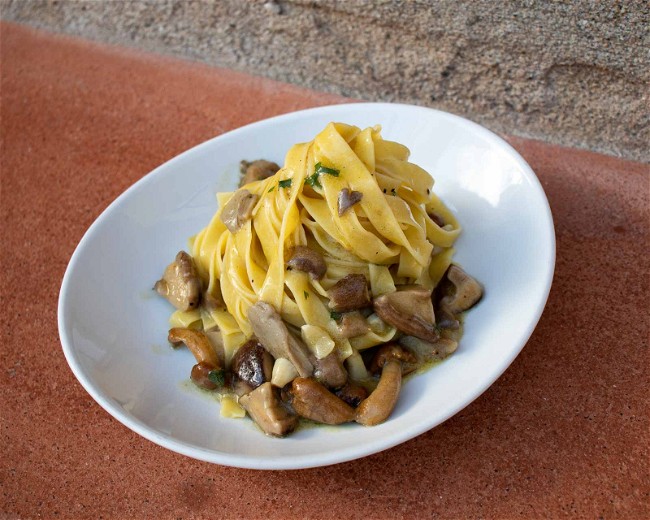
We shared photos of this fettuccine with porcini mushrooms on social media and our inbox filled up immediately. Everyone wanted the recipe. That response made perfect sense to us, because this is one of those pastas we come back to every few weeks, no matter the time of year.
It is a white sauce pasta, but there is no cream in it. Instead, the sauce comes from butter, olive oil, pasta water, and parmigiano, all pulled together in the pan at the last moment. The porcini do the rest. Whether you use fresh or dried, the depth of flavor is remarkable.

How to Find Good Porcini Mushrooms
Finding high-quality porcini can be hit or miss. Their flavor ranges from delicate to intensely earthy depending on the season, the source, and how they were stored. That variability affects the final dish significantly, so it is worth being thoughtful about where you buy them.
We buy fresh porcini in the fall when they are in season and dried ones a little later in the year. We do not have a single favorite brand, but we do try to buy dried porcini from Italy or from suppliers we know. Check the label for country of origin. Italian porcini tend to have a more pronounced, complex flavor than those from other regions.
In the U.S., high-end grocery stores often carry fresh porcini in season and dried ones year-round. Italian specialty markets are another reliable source. If porcini are out of your budget or unavailable, fresh chanterelles make an excellent substitute and are available for much of the year.
Fresh Porcini vs. Dried Porcini
Both work well in this recipe, but they behave differently and each has its own advantage.
Fresh Porcini
In Calabria, we are a short drive from the Sila, a national park in the mountainous interior of the region. The fungi there are exceptional, and the porcini in particular are unlike anything you can find elsewhere. Giuseppe's parents are expert foragers. On a good day, they come home from the mountains with a full basket.
If you are not familiar with fresh porcini, they can be enormous. Some grow as large as your head and weigh close to a kilogram. They are meaty, deeply flavored, and have a texture that is difficult to replicate with any substitute. When we have them fresh, we use them in pasta. We also wash, slice, and freeze extras to use throughout the year.

Dried Porcini
Dried porcini are our go-to for most of the year. We generally reserve them for risotto and baked dishes, but they work well here too. The texture will be slightly softer than fresh, but the flavor is concentrated and deeply savory.
The added bonus with dried porcini is the soaking liquid. That mushroom water is full of flavor. Rather than pouring it away, add it to the pasta water to build in even more depth. Make sure to strain it well through a paper towel or cheesecloth before using, as it can contain grit.
Most importantly, do not rush the soaking step. Sixty to ninety minutes gives the mushrooms time to fully rehydrate and the liquid time to develop. If pieces still feel firm or brittle, leave them longer.
Related: How to Rehydrate Dried Mushrooms

About the Butter
This is the first pasta recipe we ever published that calls for butter. In southern Italy, most people do not use it, not even in risotto or for baking. The rivalry between olive oil and butter runs deep in Italian cooking. As the writer Elizabeth Minchilli puts it, Italians are "equal opportunity fat consumers," and so are we. If you are curious how other cooking fats compare, we also have a full breakdown of ghee vs. olive oil.
Some similar recipes call for cream. We do not recommend it. Adding cream to porcini mutes the mushroom flavor rather than enhancing it. The butter, pasta water, and parmigiano create all the richness this dish needs. Let the porcini have their moment.
Ingredients
- 0.8 lb (350 g) fettuccine all'uovo, dry
- 0.67 lb (300 g) fresh porcini mushrooms OR 1.4 oz (40 g) dried porcini mushrooms
- 4 tbsp (60 ml) extra virgin olive oil
- 2 tbsp (30 g) butter
- 3 cloves garlic, smashed
- 2 sprigs fresh parsley, finely chopped
- ⅓ cup (28 g) Parmigiano Reggiano, finely grated
- Salt to taste
- Freshly cracked black pepper to taste
For the olive oil, we recommend our Lina extra virgin olive oil. Its depth and earthy notes pair exceptionally well with porcini mushrooms.
How to Make Fettuccine with Porcini Mushrooms
If Using Dried Porcini (Start Here)
- Place the dried porcini in a medium bowl and cover with about 1 inch (2.5 cm) of hot tap water, not boiling. Soak for 60 to 90 minutes until the mushrooms are fully soft. If any pieces still feel firm, leave them to soak another 15 to 30 minutes.
- Place a strainer over a bowl. Line the strainer with a paper towel or cheesecloth to catch any grit. Slowly pour the mushrooms and soaking liquid through the strainer. Strain a second or third time if the liquid still looks cloudy.
- Rinse the rehydrated mushrooms under room-temperature water and set aside.
- Pour the strained porcini water into a large pot and use it as the base for your pasta water. Continue with the steps below.
If Using Fresh Porcini (Start Here)
- Bring a large pot of salted water to a boil.
- Cut the mushrooms into 1-inch (2.5 cm) pieces.
- Place a medium-large pan on low heat. Add the olive oil, butter, and smashed garlic. Cook until the garlic turns golden blonde, then remove and discard it.
- Add the mushrooms to the pan and increase the heat to high. Cook for 3 minutes, stirring regularly.
- Season with salt and freshly cracked black pepper to taste. Remove the pan from heat and stir in the parsley. The sauce is ready.
- Add the fettuccine to the boiling water and cook for 1 minute less than the al dente time on the package. Reserve at least 1 cup (235 ml) of pasta water before draining.
- Turn the sauce to medium heat and add the drained pasta. Stir for 30 seconds. Add half a ladle of pasta water, turn the heat to high, and stir continuously. Add more pasta water if the pasta begins to dry out. Cook for 1 to 2 minutes, stirring the whole time.
- Remove from heat. Add the parmigiano and stir to incorporate. Plate immediately and serve.
Frequently Asked Questions
Can I Use a Different Pasta Shape?
Yes. Tagliatelle is the most natural substitute and behaves almost identically to fettuccine. Pappardelle works well too. If you want a shorter pasta, rigatoni or penne will hold the sauce nicely. Avoid very thin shapes like spaghetti, as they can get lost against the chunky porcini.
What If I Cannot Find Porcini?
Fresh chanterelles are the best substitute for fresh porcini. For dried, a good-quality mixed dried mushroom blend will work. Cremini or shiitake mushrooms can also step in, though the flavor will be milder. If you go that route, consider adding a small amount of dried porcini powder to deepen the sauce.
Can I Add Cream?
You can, but we would not. Cream suppresses the earthy, complex flavor of the porcini rather than complementing it. The butter, starchy pasta water, and parmigiano already create a rich, silky sauce. Trust the process.
Why Does the Garlic Get Removed?
The garlic is used to scent the oil and butter, not to stay in the dish. Removing it once golden keeps the flavor subtle and clean. If you prefer a stronger garlic presence, leave one clove in and smash it further as it cooks.
Can I Make This Ahead of Time?
The porcini sauce can be made a few hours ahead and stored at room temperature. Cook and add the pasta just before serving. Fettuccine does not hold well once sauced, so plan to finish the dish right before you eat.
You may also like:
Pasta with Garlic and Olive Oil
Every recipe in our kitchen starts with our family's extra virgin olive oil, cold-pressed from groves along the Ionian coast of Calabria that have been in Giuseppe's family since 1927. It is what we use every day, and it makes a genuine difference in dishes like this one. Shop our olive oil here.
We wrote a book called The Olive Oil Enthusiast. Order your copy today.
Making this dish? Tag us on Instagram and TikTok with #EXAUoliveoil for more!


Leave a comment