



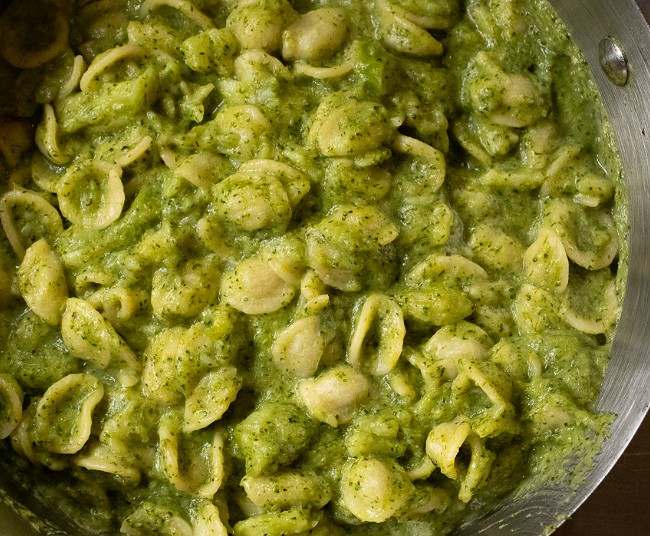
This orecchiette with broccoli recipe, known in Italian as orecchiette con broccoli, comes together in under 30 minutes and makes an incredibly creamy pasta sauce without a drop of cream. It is one of the most beloved vegetable pasta dishes in southern Italy, and once you make it, you will understand why.
The secret is technique: you cook the broccoli until very soft, then let it break down into the pasta water and olive oil to form a silky, naturally creamy coating. A generous pour of high-quality extra virgin olive oil is what pulls it all together.

What Is Orecchiette con Broccoli?
Orecchiette con broccoli is a traditional Italian pasta dish from Puglia, a region in the heel of Italy's boot. The name means "little ears with broccoli," referring to the small, round, ear-shaped pasta native to the region. It is a simple dish built on a short ingredient list: pasta, broccoli, garlic, olive oil, and optionally a single anchovy fillet.
Because the ingredient list is so short, the quality of each ingredient matters. This is especially true of the olive oil, which forms the base of the sauce. We use our own Calabrian extra virgin olive oil for this recipe. Its fruity, grassy notes complement broccoli and garlic beautifully.
Where Does Orecchiette Come From?
Orecchiette originates from Puglia and Basilicata in southern Italy. Food historians believe the pasta shape arrived in the region during the 12th or 13th century, though scholars debate whether credit belongs to the Angioini dynasty or the Normanno-Sveva period.
Today, the city of Bari in Puglia is most famous for orecchiette. Walk the old city streets and you will still find local women sitting outside their doorways, shaping pasta by hand and selling it fresh. The Pasta Grannies video showing this tradition is worth watching before you cook.
In Bari, orecchiette is most often served with cime di rapa, broccoli, cauliflower, or a slow-cooked meat ragù. There are two sizes: large orecchiette for vegetable sauces, and small orecchiette for ragù. This recipe uses the large size.
What Does Orecchiette Mean?
Orecchiette means "little ears" in Italian. The name comes from the shape of the pasta: small, round, and slightly cupped, like a tiny ear. That cup shape is functional, too. It catches and holds the sauce, so every bite is full of flavor.
Why This Recipe Works
The magic of this dish comes from a technique most home cooks do not expect. You cook the broccoli until very soft, almost falling apart, then combine it directly with the pasta in a hot pan with olive oil and pasta water. As you stir, the broccoli breaks down and coats every piece of pasta in a creamy, naturally green sauce.
This is the Italian approach to vegetable pasta. The vegetable is not a topping — it becomes the sauce. The same principle applies to patate e peperoni, where the peppers and potatoes slowly become their own soft, savory coating.
A good extra virgin olive oil is essential here. It is not just for cooking. It is a flavor ingredient that brings fruitiness and depth to what might otherwise be a plain vegetable pasta.
Ingredients for Orecchiette con Broccoli
Serves 2 to 3.
- 350g (0.75 lb) orecchiette
- 1 large head broccoli
- 4 tbsp extra virgin olive oil (we use the Turi)
- 2–3 garlic cloves, smashed
- 2 tbsp coarse sea salt (for the pasta water)
- Freshly cracked black pepper, to taste
- 1 large anchovy (optional)
- 1/2 cup freshly grated Parmigiano Reggiano (optional — omit if using anchovy)
How to Make Orecchiette with Broccoli
Step 1: Salt and Boil the Water
Fill a medium-large pot with water and bring to a boil. Add the coarse sea salt. The water should taste as salty as the sea — if it doesn't, add more. This is the only opportunity to season the pasta and broccoli from the inside out.
Step 2: Prep and Cook the Broccoli
Cut the broccoli into 1½" chunks, removing the stems if desired. Add the broccoli to the boiling salted water and cook for 10 to 12 minutes, until very soft. This is important — you want the broccoli nearly falling apart so it breaks down into the sauce in the final step.
Step 3: Make the Garlic and Olive Oil Base
While the broccoli cooks, heat a medium-large sauté pan on medium-low. Add the olive oil, smashed garlic, and the anchovy if using. Cook gently until the anchovy has melted completely into the oil and the garlic is golden, about 2 minutes. Remove from heat and set aside.
Step 4: Cook the Pasta in the Broccoli Water
Add the orecchiette directly to the broccoli water, stirring every 2 minutes. Cook until 2 to 3 minutes before the al dente time listed on the package — the pasta will finish cooking in the pan.
Step 5: Finish in the Pan
Return the garlic and olive oil pan to medium heat and add a ladle of pasta water. Using a slotted spoon, transfer the orecchiette and broccoli directly into the pan. Turn the heat to high and stir continuously. Add more pasta water as needed to reach your desired texture — we like ours a little soupy. Add freshly cracked black pepper.
Step 6: Add Cheese and Serve
If using Parmigiano Reggiano, remove the pan from heat, add the cheese, and stir until fully incorporated. Skip the cheese if you used the anchovy — the two together are too salty. Serve immediately.
Tips for the Best Orecchiette con Broccoli
Use Good Olive Oil
This recipe has very few ingredients, so each one carries weight. Extra virgin olive oil is both the cooking fat and a key flavor component. Use an oil with fruity, grassy notes rather than a neutral or refined one. Our Turi extra virgin olive oil works especially well with vegetables and mild fish.
Do Not Skip the Pasta Water
The starchy pasta water is what emulsifies the olive oil and broccoli into a sauce. Without it, the dish is dry. Add it gradually and keep stirring until the consistency is creamy and glossy.
Let the Broccoli Break Down
Do not be afraid of very soft broccoli here. The goal is for the florets to break apart in the pan and coat the pasta. If they stay firm, the sauce will not come together properly.
Anchovy or Cheese — Not Both
The anchovy adds a savory, umami depth that is well worth trying. But if you use it, skip the Parmigiano. Together they make the dish too salty and muddy each other's flavor. Pick one and commit.
Frequently Asked Questions
Can I make orecchiette with broccoli ahead of time?
This dish is best served immediately. Like most pasta, it loses texture and creaminess as it sits. If you need to prep ahead, cook the broccoli and make the garlic oil in advance, then boil the pasta and finish everything in the pan just before serving.
Is the anchovy necessary?
No. The anchovy is optional. It adds a savory depth that you cannot quite identify, but the dish is delicious without it. If you are cooking for someone who does not eat fish, simply leave it out.
What pasta can I use instead of orecchiette?
Orecchiette is traditional and works best because its cup shape holds the sauce. In a pinch, short pasta shapes like cavatappi, fusilli, or rigatoni work well. Avoid long pasta like spaghetti, as it will not hold the broccoli sauce the same way.
Can I use frozen broccoli?
Fresh broccoli is strongly preferred. Frozen broccoli has extra moisture and a softer texture that makes it harder to control the sauce consistency. If fresh is not available, thaw and drain frozen broccoli thoroughly before using.
What olive oil is best for this recipe?
Use a high-quality extra virgin olive oil with fruity, grassy flavor. Since olive oil is effectively the sauce in this dish, a better oil makes a real difference. Shop our Calabrian EVOO here.
We wrote a book called The Olive Oil Enthusiast. Order your copy today.
Every recipe in our kitchen starts with our family's extra virgin olive oil, cold-pressed from groves along the Ionian coast of Calabria that have been in Giuseppe's family since 1927. It is what we use every day, and it makes a genuine difference in dishes like this one. Shop our olive oil here.
You may also like:
Patate e Peperoni — Calabrian Potatoes and Peppers


Leave a comment