



Olive oil is made through a process known as extraction, which involves the harvesting, crushing, and malaxation of the fruit, followed by the centrifuging, separation, and filtration of the oil.
This flavorful and healthy product has been a staple in Mediterranean cuisine for centuries. As third-generation producers in Calabria, Italy, we live this process every fall. In this article, we explore the fascinating journey of olive oil production, from the ancient groves to the modern mill.
The Diversity of Cultivars
Amazingly, there are over 2,000 different types of olive cultivars globally. Italy alone has over 650, making it the most diverse country in the world when it comes to our favorite fruit. However, not all are used to produce oil; many are reserved for curing and eating whole, while others are planted for their beauty.
Regardless of the variety, the olive tree is a resilient plant that can live for thousands of years. The Smithsonian has reported on evidence of olive oil production dating back 8,000 years. These trees are notoriously slow growers, often needing 4 to 7 years to yield fruit, and reaching full production even later. USDA reports confirm Italy's standing as a leader in this ancient craft.
How is Extra Virgin Olive Oil Made?
Extra virgin olive oil is made from the first milling of the olive fruit by extracting the oil while maintaining a temperature of less than 80.6°F (27°C) through strictly mechanical means.
This means producers cannot use heat or chemicals during the milling or extraction process, making EVOO a raw, unrefined product. See our technical pillar post for the full chemical standards of EVOO.

The Step-by-Step Production Process
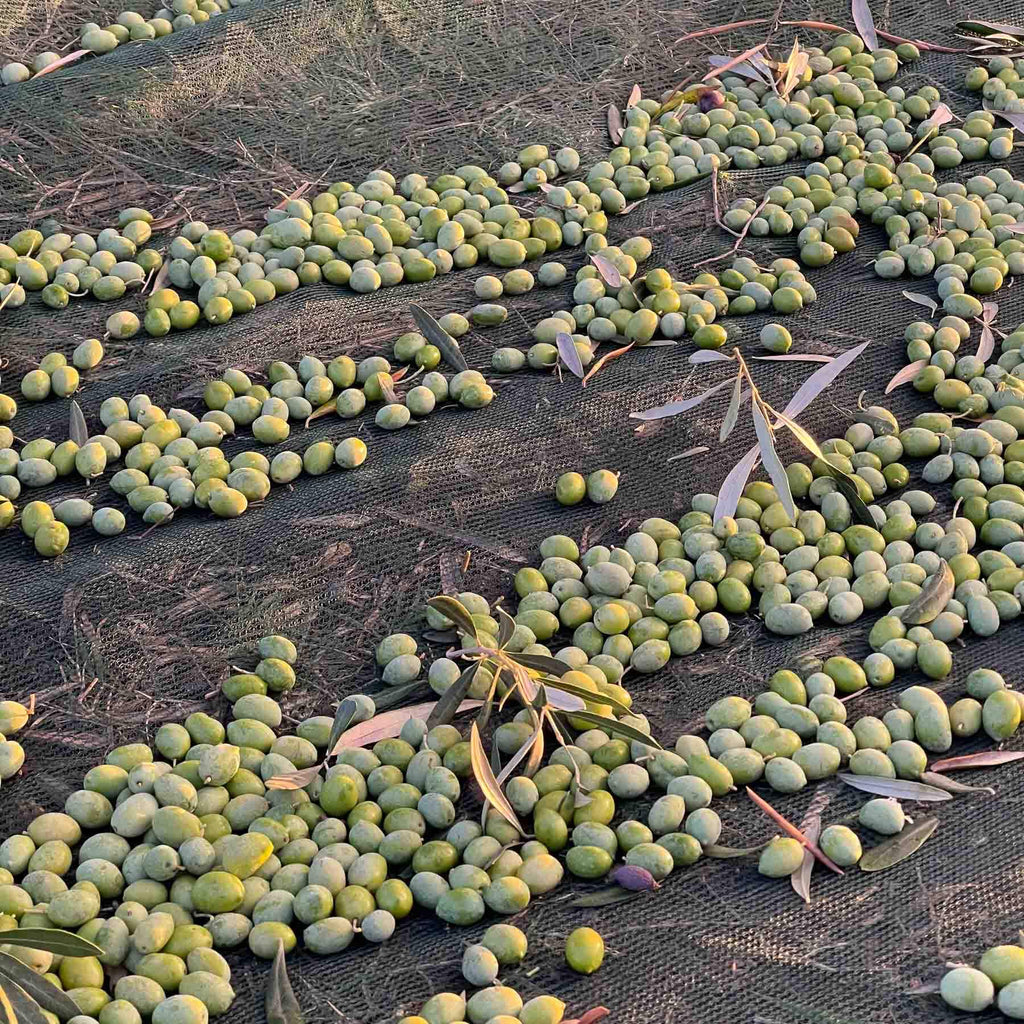
Step 1: Harvesting the Fruit
Harvesting is a defining factor of quality. In Italy, harvest season starts in September and ends in December. A day picking fruit begins at sunrise and often lasts until sunset. To maintain the highest quality, we limit our harvests to 6-hour blocks to ensure the fruit stays fresh before milling.
Methods of Picking Olives:
- Tree Shaker: A device that shakes the entire trunk.
- Branch Shaker: Handheld devices that shake individual branches.
- Electric Harvester: Tools that gently disturb the branches to release fruit.
- Tree Rakes and Sticks: Traditional tools used to "comb" the branches or knock fruit onto nets.
Step 2: Transporting the Fruit
Speed is critical. Once picked, olives are heavy and begin to oxidize immediately. We use small crates to prevent the weight of the fruit from crushing the bottom layer, which can lead to high acidity. The fruit is rushed to the mill to begin Step 3.
Step 3: Milling (The Extraction)
Modern milling is a "continuous cycle" process. While many still use the term "pressing," all premium oil today—including EXAU—is extracted using centrifuges for better hygiene and quality control. Read more on why "pressing" is an antiquated term.
The Deleafer & Washer
Fruit is poured into a deleafer to remove stems and leaves. It then enters the washer, where high-pressure water removes pebbles and debris. The olives then travel up a covered ladder toward the slicer.
The Slicer & Malaxer (The Crusher)
The olives are sliced into small pieces and moved into the malaxer. This is a perpendicular cylindrical arm that mixes the fruit into a paste for 15 to 40 minutes. This slow mixing allows the oil droplets to coalesce.
The Centrifuge (Extractor)
The paste is pumped into the centrifuge, a giant steel tube that spins at high speeds to separate the solid pomace and vegetable water from the oil. Centrifuge technology is what allowed the industry to move away from old, difficult-to-clean mats.
The Separator & Filter
The oil undergoes one final pass through a separator to remove any trace water. It then passes through a coarse filter to catch any remaining pits or skin. At this moment, you have fresh, vibrant oil ready for tasting.
Step 4: Decanting and/or Filtering
After extraction, the oil is stored in stainless steel tanks. Decanting allows particles to settle over weeks or months. Filtering involves moving the oil through paper filters to remove sediment immediately. Both processes create a shelf-stable product. See our comparison of filtered vs. unfiltered oil.
Step 5: Bottling and Labeling
We use dark glass or tin to protect the oil from light and heat. Every bottle is labeled with a harvest date. This stage is often nostalgic for us, as it marks the end of a long, hard-working harvest season with our team.
Frequently Asked Questions
Is olive oil a fruit juice?
Yes. Because extra virgin olive oil is produced only by mechanical means without heat or chemicals, it is technically the raw juice of the olive fruit. Clinical research shows this raw state is why it retains its heart-healthy properties.
What is Novello (Olio Nuovo)?
Novello is fresh, unfiltered olive oil that comes straight out of the mill. It is incredibly dense and flavorful but must be consumed within 2 months, as the fruit particles make it spoil faster.
Why is temperature control important?
If the paste gets hotter than 27°C (80.6°F) during milling, the delicate polyphenols are destroyed. Maintaining a "cold" extraction is a legal requirement for the Extra Virgin grade.
Can I see the centrifuge working?
Unfortunately, no. Centrifuges are sealed stainless steel tubes. While it’s less romantic than the old stone presses, it is significantly more hygienic and produces a much higher quality oil.
Continue Your Education
We hope you enjoyed learning about how olive oil is made! As producers, we believe it's our responsibility to help consumers understand the work that goes into every bottle. For a complete guide for beginners, check out our book, The Olive Oil Enthusiast.
You may also like:
How to Tell if Your Olive Oil is Fake
Understanding Olive Oil Acidity and FFA
What is Polyphenol Rich Olive Oil?
If you learned something new, please leave a comment below! If you’re on Instagram or TikTok, tag us and use #EXAUoliveoil so we can see your fresh harvest bottles!


1 comment
Very interesting process ,love olive oil
Leave a comment