



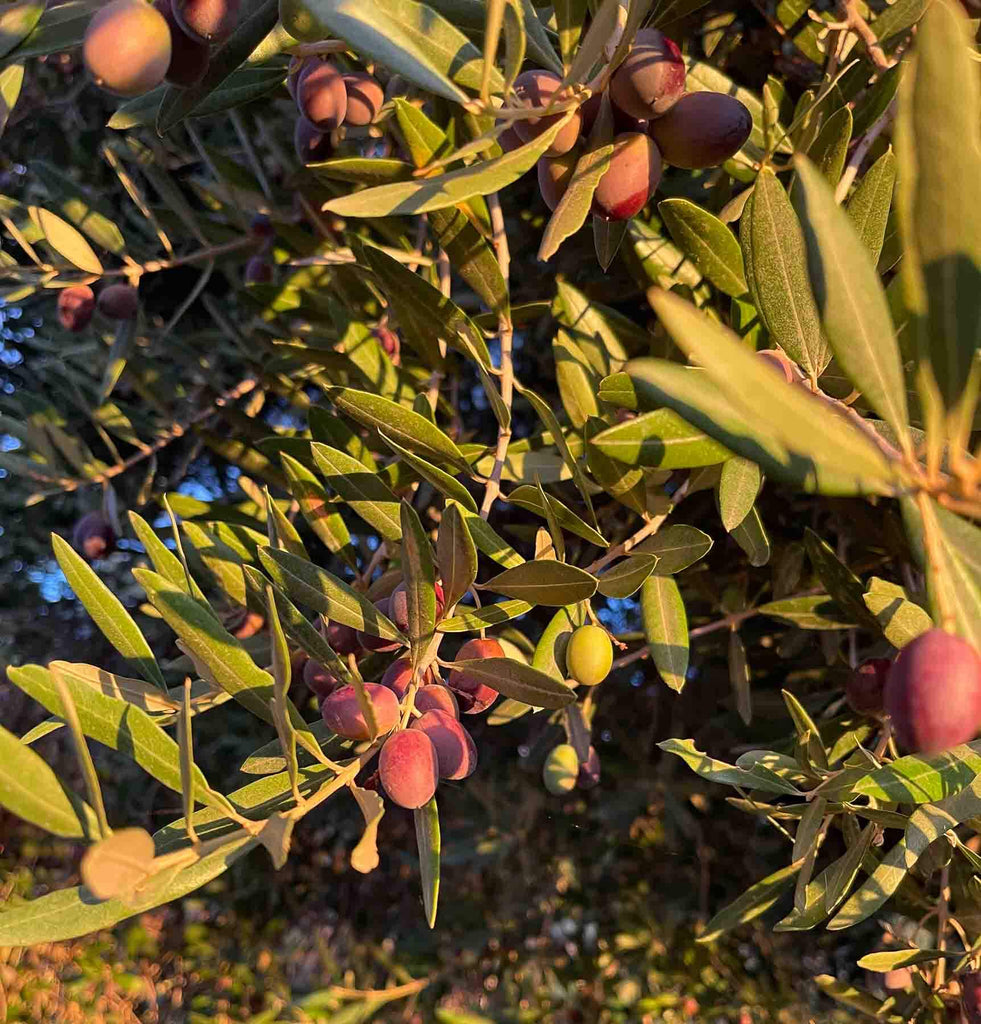
Black olives are one of the most widely used ingredients in Mediterranean cooking, but most people do not know what actually makes an olive black, why canned olives look so uniform, or how to choose a quality product. This guide covers all of it — from how they ripen to the best ways to cook and serve them.
What Are Black Olives?
Black olives are olives that have completed the full ripening process on the tree. Every olive starts green and darkens gradually as it matures — moving from green to yellowish-green, then purple, then black over a period of several weeks. This color change signals peak ripeness, a softer texture, and a more mellow, less bitter flavor compared to green olives harvested earlier in the season. Botanically, olives are a drupe — a stone fruit. They are a fruit, not a vegetable.
Because ripening happens unevenly across a grove — and even across a single tree — you will often see fruit at several stages of color at harvest time. That is completely normal and is part of what makes olive harvesting so time-sensitive. Read about how Calabrian olive harvest works here.
The Truth About Canned Black Olives
The "Jet Black" Reality: Ferrous Gluconate
The uniform, deep black color of most canned olives is not natural — it is the result of food processing. According to the FDA, manufacturers use ferrous gluconate as a color additive to fix the pigment of processed olives to a consistent, uniform black. Naturally ripened olives are rarely this color — they typically range from deep mahogany to dark purple and vary in shade across the jar.
When fruit arrives at processing facilities, it may be green, purple, or anywhere in between. To create a consistent product and mask blemishes, manufacturers treat the olives with ferrous gluconate. This is standard practice and is not harmful, but it is worth knowing if you are looking for a more naturally processed product. Traditionally cured olives — particularly those jarred under oil by small producers — are processed without this treatment.
Black Olives vs. Green Olives: What's the Difference?
The difference is simply ripeness. Green olives are harvested early, giving them higher concentrations of polyphenols and antioxidants, a firmer texture, and a more bitter, complex flavor. Black olives are harvested at full ripeness, giving them a higher fat content, softer texture, and a milder, more buttery flavor. Neither is nutritionally superior — they are the same fruit at different stages, with different strengths.
This ripeness dynamic is also why olive oil producers who want maximum polyphenol content harvest early, when the fruit is still green. The later the harvest, the higher the oil yield — but the lower the antioxidant content.
Common Types of Black Olives
There are hundreds of olive cultivars grown for eating. A few of the most widely available include:
- Kalamata: Greece's most famous table olive, almond-shaped, dark purple-black, and packed in brine or red wine vinegar. Rich, fruity, and deeply savory — the standard for Greek salad.
- Gaeta: A small Italian olive from Lazio, wrinkled and dry-cured or brine-cured, with a mild, nutty flavor. Common in Roman cuisine and pasta dishes.
- Cellina di Nardò: A Puglian cultivar with an unusual berry note alongside the typical olive bitterness. Used for both oil and table consumption in southern Italy.
- Hojiblanca: A Spanish variety, mildly bitter with a clean finish. One of the most widely grown dual-purpose cultivars in Spain.
- Taggiasca: Liguria's beloved small black olive, buttery and low in bitterness. The same cultivar used to produce one of Italy's most delicate extra virgin olive oils.
For a full look at regional Italian cultivars and how they affect flavor, see our complete guide to Italian extra virgin olive oil.
How Black Olives Are Cured
Like green olives, black olives must be cured before eating — raw olives of any ripeness are too bitter to enjoy straight from the tree. The curing method significantly affects the final flavor and texture.
- Brine curing: The most common method. Olives are submerged in a salt brine and ferment slowly over weeks to months. This preserves the most natural flavor and phenolic compounds.
- Dry curing: Olives are packed in salt without liquid, drawing out moisture over time. The result is a wrinkled, intensely flavored olive with concentrated taste — common in Italian and Greek traditions.
- Oil curing: Olives are packed under olive oil, often with herbs and garlic. The oil carries aromatics into the fruit and keeps it moist. In Calabria, this tradition — known as sott'olio — is still practiced by home producers every harvest season.
- Lye curing: Used in large-scale commercial production to speed up the debittering process. Produces a milder, more uniform olive — the method behind most canned black olives sold in grocery stores.
How to Use Black Olives in the Kitchen
Black olives are more versatile than their reputation as a pizza topping suggests. Their mellow, buttery flavor works well in slow-cooked dishes where green olives might be too sharp. Add them to braised chicken or lamb in the final 10 minutes, stir into pasta sauces for depth, press into focaccia dough, or blitz with capers and olive oil for a quick tapenade. For shopping, look for olives packed in brine with no artificial colorants listed. Store opened jars refrigerated and submerged in their liquid.
Frequently Asked Questions
Are black olives and green olives the same thing?
Yes — they are the same fruit at different stages of ripeness. Green olives are harvested early, black olives at full maturity. The difference in color, texture, and flavor all come down to when they were picked.
Are black olives healthy?
Yes. Black olives are a good source of monounsaturated fat, vitamin E, and iron. They contain fewer polyphenols than green olives due to ripening, but their fat profile remains heart-healthy. The main nutritional consideration is sodium — most cured olives are high in salt, though rinsing before eating reduces this significantly.
Why do canned black olives taste different from jarred ones?
Canned olives are typically lye-cured for speed and consistency, then treated with ferrous gluconate to fix their color. Jarred olives — particularly those from small producers — are more often brine or dry-cured using traditional methods, which preserves more of the natural flavor complexity. The processing method, not just the cultivar, drives most of the taste difference.
Can you use black olives in cooking the same way as green?
Yes, though the results differ. Black olives are milder and softer, so they work better in slow-cooked dishes where their flavor can mellow further. Green olives hold their shape and bitterness better at high heat, making them preferable for dishes where you want a brighter, more assertive flavor.
What is the difference between Kalamata olives and regular black olives?
Kalamata olives are a specific cultivar from the Peloponnese region of Greece, almond-shaped and dark purple-black in color. "Regular" black olives typically refer to California-style canned olives made from under-ripe green fruit that has been artificially darkened with ferrous gluconate — not naturally ripened black olives at all. Kalamata olives are always naturally cured and significantly more flavorful.
Shop our 100% Italian extra virgin olive oil, made in Calabria, single origin, and family farmed since 1927.
We wrote a book called The Olive Oil Enthusiast. Order your copy today.
You May Also Like
- Green Olives: What They Are and Why They're Harvested Early
- Are Olives a Fruit or a Vegetable?
- Polyphenol-Rich Olive Oil: What It Means and Why It Matters
Have a favorite way to use black olives? Leave a comment below! Tag your cooking on Instagram, Facebook, and TikTok with #EXAUoliveoil.


Leave a comment