



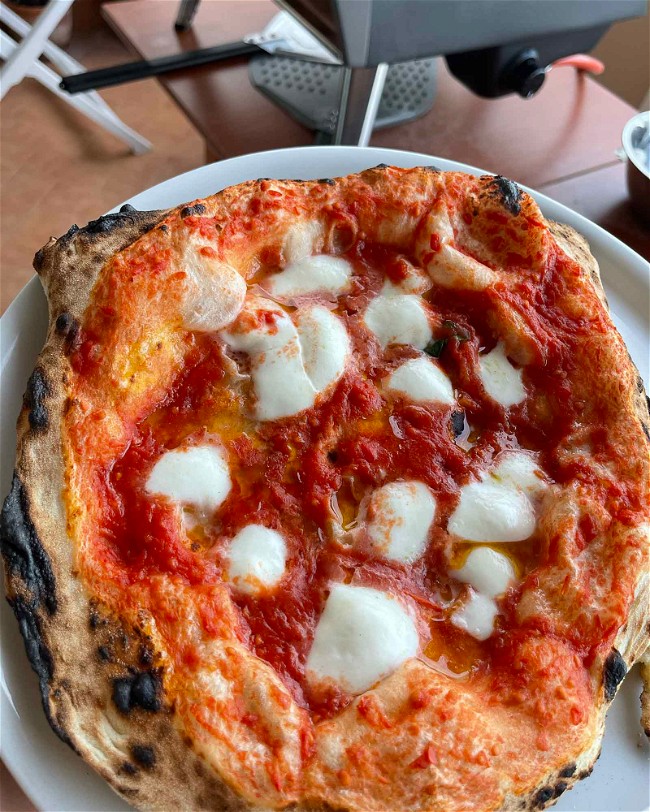
Pizza Margherita is four ingredients on dough. The recipe is not complicated, but it does require patience. Plan for at least 30 hours from start to finish, almost all of it hands-off while the dough cold-ferments in the fridge. The result is a pillowy, slightly charred crust with a gooey center that tastes like Naples. Pizza is, technically, bread — and Neapolitan pizza is one of the most celebrated breads in the world. To see how it fits into Italy's wider bread traditions by region, read our Guide to Italian Breads.
How do you make authentic Neapolitan Pizza Margherita?
To make authentic Pizza Margherita, prepare a high-hydration dough using Type 00 flour and allow it to cold-ferment in the refrigerator for at least 24 hours. Top with hand-crushed San Marzano tomatoes, fresh fior di latte mozzarella, and basil. Bake at the highest possible temperature (550°F in a home oven or 800°F+ in a pizza oven) until the crust is charred and pillowy, then finish with a generous drizzle of high-quality extra virgin olive oil.

A Brief History of Pizza Margherita
Modern pizza began in Naples in the early 1700s, born from centuries of flatbread tradition. By the 1800s it was well documented as street food for all social classes. Alexandre Dumas described it in his 1843 book Corricolo, and Francesco de Boucard's 1866 Usi e Costumi di Napoli specifically names the Margherita — tomato, mozzarella, and basil, the cheese cut and arranged in the shape of a daisy.
Today, true Pizza Napoletana is a protected craft. It is cooked at 815°F to 905°F in a wood-burning oven and done in 50 to 90 seconds. Neapolitan pizzaiuoli train for years to master the dough and the fire. The purists say there are only two real pizzas: Marinara and Margherita. This is the latter.

What Makes a Margherita a Margherita
San Marzano Tomatoes
San Marzano is a cultivar of plum tomato from Campania, Italy. True DOP San Marzano tomatoes grow only in the volcanic soil at the base of Mount Vesuvius — the same volcano that buried Pompeii in 79 AD. The mineral-rich soil produces a tomato that is sweeter, less acidic, and meatier than standard varieties. For the sauce: crush the tomatoes by hand, add basil and salt, and let it rest. Do not cook it. The raw sauce finishes on the pizza in the oven.
Fior di Latte Mozzarella
Fior di latte — "flower of the milk" — is mozzarella made from whole cow's milk, as opposed to the buffalo milk version. It melts evenly and is the traditional choice for Pizza Napoletana. Cut it into ½ inch cubes and drain on a paper towel before topping the pizza to prevent a watery center.
Extra Virgin Olive Oil
The olive oil goes on last — drizzled over the pizza the moment it comes out of the oven. This is not a garnish. The heat of the pizza immediately blooms the oil's aroma, and a quality EVOO adds a grassy, peppery finish that ties the whole dish together. This is exactly what finishing oil is made for. We use our Turi — its lighter profile complements the mozzarella without competing.
It is also worth noting that olive oil plays a structural role in the dough itself, contributing to a more supple, extensible texture. If you want to understand why extra virgin is the only grade worth using — in the dough and as a finish — read our producer's guide to EVOO and the complete guide to Italian extra virgin olive oil. For a deeper look at how EVOO performs in baked doughs specifically, see how to bake with olive oil. And if you are ever tempted to swap in a seed oil or neutral refined oil instead — here is why that is worth reconsidering.

Ingredients
Neapolitan Pizza Dough (makes 6 pizzas)
- 1 kg type 00 flour
- 2 g dry active yeast (or 5 g fresh yeast, check the refrigerated section)
- 30 g fine sea salt
- 50 ml room temperature water, plus 650 ml cold water
- 45 g extra virgin olive oil
Margherita Toppings (per pizza)
- 45 g extra virgin olive oil
- 1 can (15 oz / 425 g) San Marzano tomatoes
- 4 fresh basil leaves
- 2 pinches of salt
- 600 g fior di latte mozzarella, cut into ½ inch cubes
Directions
Dough
- In a small cup, dissolve the yeast in 50 ml of room temperature water. Stir and set aside.
- In a large bowl or standing mixer on level 1, add half the flour. Slowly add half the cold water, about 50 ml at a time. After 2 minutes, add the yeast mixture and increase to level 2 for 1 minute. Gradually add the remaining flour, then the remaining water. Mix by hand for 10 minutes total (standing mixer on level 2–3 for 5 minutes).
- While mixing, add the salt and incorporate thoroughly. Taste and adjust if needed. Then add the extra virgin olive oil and continue mixing.
- Work the dough by hand for another 15 minutes until smooth and elastic (standing mixer on level 2–3 for 5–7 minutes). It should no longer stick to the bowl.
- Transfer the dough to a container, cover with plastic wrap, and leave at room temperature for 3 hours. On a hot day, 1 hour is enough.
- Divide into 6 equal pieces and shape each into a ball. Drizzle a thin layer of olive oil onto a baking tray that fits in your fridge. Rework each ball into a tight round and place on the tray with about 2 inches between each. Cover and let rise at room temperature for another 2 hours.
- Refrigerate for 24 hours. This cold fermentation develops the flavor and produces the characteristic open crumb and pillowy crust.
Sauce, Toppings, and Baking
- Remove the dough from the refrigerator 3 hours before baking (1 hour if it is a hot day) and let it come to room temperature.
- Open the can of San Marzano tomatoes and crush them by hand into a bowl — aim for a rough, textured sauce rather than a smooth purée. Add the basil leaves and salt, stir, and set aside for at least 1 hour.
- For a home oven: preheat to the highest temperature possible, usually 550°F / 290°C. For an outdoor pizza oven, the target is 800°F / 425°C. We use an Ooni and love it.
- Stretch each dough ball into a circle approximately 12–14 inches wide on a floured surface and transfer to a pizza peel or board.
- Spoon 3 to 4 tablespoons of tomato sauce onto the dough and spread evenly, leaving about an inch of border for the crust. Add the mozzarella. Do not overload — too many toppings will weigh down the center and prevent it from cooking through.
- Home stove/oven method: Preheat a round oven-safe nonstick or cast-iron pan over medium-high heat. Once hot, slide the pizza into the pan and cook on the stovetop for about 2 minutes to set the base. Transfer to the oven under the broiler to finish — the cheese should be fully melted and the crust edges puffed and lightly charred.
- Pizza oven method: Slide the topped pizza directly into the oven. Rotate every 20 to 30 seconds until the edges are fluffy and the cheese is fully melted, about 90 seconds total.
- Remove from the oven and immediately drizzle generously with extra virgin olive oil. Cut and serve at once.
Tips and Notes
Plan ahead. The dough needs at least 24 hours of cold fermentation plus several hours of room temperature rest. Start the day before at minimum — two days before is even better for flavor.
Type 00 flour matters. It is finely milled and lower in protein than all-purpose flour, which gives Neapolitan dough its characteristic softness and extensibility. It is widely available online and in Italian specialty stores.
Do not skip the drain step on the mozzarella. Excess moisture is the enemy of a properly cooked Margherita. Pat the cubes dry before topping.
Use a standing mixer if you have one. Ten to fifteen minutes of hand-kneading is achievable but tiring. A stand mixer on level medium-low handles it in half the time with better consistency.
The finishing oil is not optional. A cold drizzle of high-quality EVOO right off the oven is what separates a great Margherita from a good one. Do not skip it, and do not use a neutral oil.
Frequently Asked Questions
Can I make the dough the same day?
Technically yes, but the result will be noticeably different. Cold fermentation develops flavor compounds and improves the dough's extensibility and crumb structure. A same-day dough will be edible, but it will not have the same depth of flavor or texture. If you are short on time, let the dough rest at room temperature for at least 4 to 6 hours rather than refrigerating.
Can I freeze the pizza dough?
Yes. After shaping into balls, freeze them individually on a tray, then transfer to sealed bags. Defrost in the refrigerator overnight and bring to room temperature for 2 to 3 hours before use. The texture holds well.
What can I use instead of San Marzano tomatoes?
Any high-quality whole peeled plum tomato will work. Look for Italian-grown tomatoes with minimal added ingredients — just tomatoes, tomato juice or purée, and salt. Avoid pre-seasoned or pre-crushed canned tomatoes for this recipe.
Can I add toppings beyond the Margherita?
Of course — but the Margherita is worth making as written at least once before customizing. The restraint is the point. Once you taste how good three quality ingredients can be on a properly made dough, the impulse to pile on toppings tends to fade.
Every recipe in our kitchen starts with our family's extra virgin olive oil, cold-pressed from groves along the Ionian coast of Calabria that have been in Giuseppe's family since 1927. It is what we use every day — and it makes a genuine difference in dishes like this one. Shop our olive oil here.
We wrote a book called The Olive Oil Enthusiast. Order your copy today.
You May Also Like:
If you make this recipe, please leave a comment and give it a rating — we read every one. If you are on Instagram, TikTok, or Facebook, tag us with #EXAUoliveoil so we can repost.


Leave a comment